Cross of Jerusalem
A Quiet, Reverent Presence — Not Flashy, But Deeply Intentional
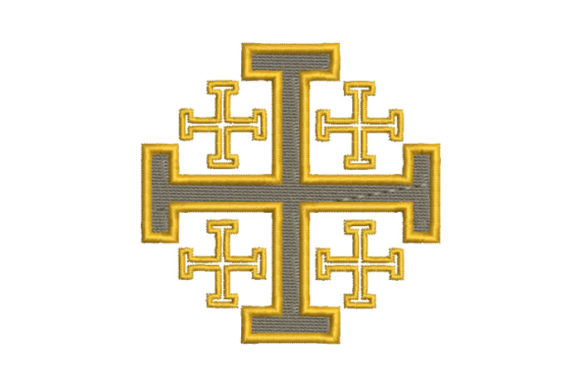
First impression? The Cross of Jerusalem lands with calm authority—not loud, not ornate for ornament’s sake, but balanced, grounded, and unmistakably sacred. Its four arms taper gently, each ending in a subtle flare that nods to tradition without leaning into heavy symbolism or baroque complexity. There’s no dense scrollwork or overlapping iconography—just clean lines, thoughtful spacing, and a centered visual weight that makes it feel both ancient and wearable today. As a machine embroidery design, it reads clearly at 3–4 inches wide, holds its shape on curved seams, and doesn’t overwhelm the fabric. That matters—especially when you’re stitching it onto a linen tea towel for a church bazaar or a soft cotton baby onesie for a baptism gift.
Where It Shines: Real Projects, Real Customers
I recently tested Cross of Jerusalem on a heavyweight organic cotton tote bag—intended for a small faith-based boutique—and it performed exactly as hoped. Stitched in ecru thread on natural canvas, the design read as warm and handmade, not mass-produced. No skipped stitches, no thread breaks, and the satin stitch edges stayed crisp across the full arm span. It also translated beautifully onto a brushed-cotton sweatshirt (medium-weight, mid-shoulder placement), where the fill stitch density held up without puckering—thanks to smart digitizing that avoids over-stuffing narrow sections.
For Etsy sellers and craft business owners: this is a strong candidate for personalized gifts. Think embroidered pillow covers for newlyweds, monogrammed kitchen towels with Cross of Jerusalem tucked in the corner, or minimalist patches sewn onto denim jackets. It’s equally effective as a standalone design on a child’s apron or stitched subtly along the hem of a baptismal blanket. Because it’s not overly detailed, it scales well—from 2.5” patches to 6” hoop placements on quilt blocks—without losing legibility or emotional resonance.
What It Does for Your Brand and Buyer Trust
When customers see Cross of Jerusalem on your finished product, they don’t just register “a cross.” They sense intention. That quiet dignity builds trust—especially for faith-centered shops, small ministry vendors, or makers who sell through church fairs or Catholic gift catalogs. It feels respectful, not decorative. That distinction matters. A rushed or overly stylized religious motif can unintentionally cheapen the sentiment; Cross of Jerusalem avoids that entirely. Its restraint supports professionalism, whether you’re branding a line of nursery decor or offering custom apparel for a retreat center.
Where to Use It Thoughtfully — Not Every Fabric or Fit Is Equal
This isn’t a one-size-fits-all embroidery file. On thin or loosely woven fabrics—like lightweight voile baby caps or sheer organza prayer cards—I’d recommend backing with tear-away *and* light cutaway stabilizer. The outer arms are long enough that unsupported stitch tension can cause slight distortion if the base fabric shifts. Likewise, on highly textured surfaces (bouclé knit sweatshirts, terry cloth towels), test first: the satin stitch definition may soften slightly, trading sharpness for cozy warmth—a trade-off worth noting for your product photos.
Curved surfaces like baseball caps require extra attention. Cross of Jerusalem works best on front panels (not crowns or bill curves) due to its symmetrical layout. And while it’s not an applique design, avoid layering it directly over thick seams or double-fold hems—stitch density near the center can compress unevenly. For dark fabric, choose high-contrast thread colors (ivory, gold, or deep navy) and check how the fill stitch opacity reads in natural light—not just under studio bulbs.
Design Notes You’ll Want Before You Hoop Up
- Test first. Always run Cross of Jerusalem on scrap fabric matching your final project’s weight, weave, and stretch—even if it’s just a 2” swatch.
- Stabilizer is non-negotiable. Medium-weight cutaway gives the cleanest result on knits and wovens alike. Skip tear-away-only on anything with even slight give.
- Check small details. Zoom in on your embroidery software: look for tight corners, smooth transitions between satin and fill areas, and consistent stitch direction. This design handles those well—but verify before cutting into your good fabric.
- Mock it digitally. Drop Cross of Jerusalem into black-and-white printable mockups. Does it hold presence on dark backgrounds? Does it vanish on busy prints? These aren’t just aesthetic checks—they inform your Etsy listing visuals and social media previews.
- Confirm licensing. Since this is a digital embroidery file sold for creative use, review the terms before selling finished products or bundling it into design assets. Commercial embroidery rights aren’t automatic—even for religion-themed work.
Why It Fits So Naturally Into Handmade Work
Cross of Jerusalem doesn’t shout. It anchors. That makes it unusually versatile for craft business owners balancing authenticity with market appeal. It reads clearly on a holiday embroidery sampler, adds gravitas to a wedding gift set, and lends quiet significance to a child’s first communion keepsake. For apparel decorators, it’s a reliable go-to when clients want meaning without motif overload. For hobbyists stitching their own devotional items, it feels satisfying to hoop and complete—no frustration from tangled jump stitches or tiny lettering that blurs at scale.
It’s not flashy. It’s not trendy. But in a landscape crowded with fast-digital, low-effort designs, Cross of Jerusalem stands out by doing one thing exceptionally well: honoring the subject with clarity, care, and craft. Whether you're prepping for a craft fair, building an Etsy shop’s core collection, or embroidering a custom gift for someone marking a sacred milestone—it earns its place.