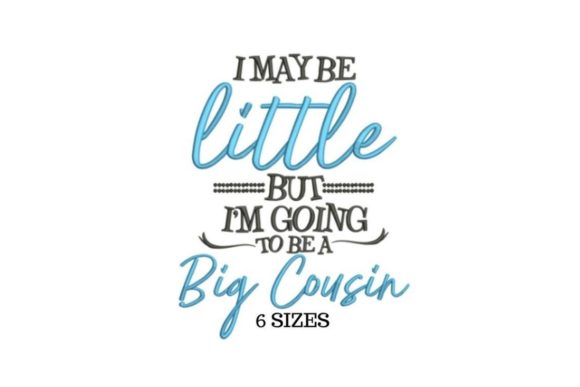
Little Cousin: A Charming Embroidery Design for Meaningful Gifting
First Impressions: Sweet, Sincere, and Instantly Relatable
As an embroidery designer who’s tested hundreds of digital embroidery files for baby boutiques, wedding studios, and Etsy shops, I opened Little Cousin expecting a simple motif—and found something far more resonant. It’s not just a name or a phrase; it’s a quiet celebration of early family bonds. The design strikes a lovely balance: soft enough for newborns, warm enough for grandparents, and thoughtful enough to feel handmade—even before the needle moves. There’s no clutter, no forced whimsy—just clean, friendly lettering with subtle charm. It leans classic rather than trendy, making it timeless across seasons and styles. Whether stitched on a gauzy muslin blanket or a sturdy linen pillow cover, Little Cousin feels intentional, tender, and quietly joyful.
Where This Design Truly Shines
Little Cousin is a versatile machine embroidery design that works beautifully across multiple personalized gift categories. For baby embroidery, it elevates everyday items: think organic cotton onesies (with careful stabilizing), swaddle blankets, and burp cloths—especially when paired with a tiny embroidered heart or star nearby. As a wedding gift, it adds heartfelt meaning to custom kitchen towels, monogrammed aprons for the new couple, or even a delicate linen napkin set for the bridal shower. Family keepsakes? Absolutely. Stitch it onto a memory quilt square, a framed nursery wall hanging, or a hand-stitched tote bag meant to carry baby’s first library books.
For Etsy sellers and small shop owners, Little Cousin is a quiet powerhouse. It pairs effortlessly with neutral palettes—cream, oat, sage, and soft navy—so your product photography stays cohesive and calming. Customers instantly recognize its emotional weight: this isn’t mass-produced sentiment. It’s a gentle nod to connection, perfect for families expanding through marriage, adoption, or birth. Craft fair vendors tell me they’ve used it on embroidered pillow covers and mini blanket rolls—items that sell quickly because they’re both giftable *and* display-worthy.
Smart Placement Matters: Know When to Lean In—and When to Pause
Like any well-crafted embroidery file, Little Cousin rewards intentionality. Its charm lives in readability and warmth—not in micro-detail. So avoid pushing it onto fabrics where clarity suffers: ultra-thick terry cloth towels (stitch density may flatten the letterforms), heavily textured bouclé or corduroy (details can blur), or highly stretchy baby knits without proper cutaway stabilizer. Curved surfaces—like the rounded edge of a baby bib or tapered tote strap—require careful hooping and possibly slight digitizing adjustments if you’re modifying the file.
Dark fabric demands attention too. If stitching Little Cousin on charcoal or navy, test thread colors for contrast—light ecru or pale grey may vanish unless you use matte white or ivory thread with high sheen control. And while it reads beautifully on light cotton and linen, avoid cramming it into tiny spaces: those delicate curves in the “L” and “C” won’t translate cleanly under 3 inches wide. Always confirm hoop size compatibility before prepping your production run.
Why This Design Builds Trust—and Sales
Customers don’t just buy embroidery—they buy meaning, care, and perceived craftsmanship. Little Cousin delivers all three. Its understated elegance signals quality without shouting. When buyers see it stitched cleanly on a handmade blanket or a premium embroidered towel, they associate it with thoughtfulness—not fast craft. That perception lifts perceived value, supports higher price points, and encourages repeat orders. For Etsy sellers, it’s also a strong visual anchor: pair it with a printable mockup showing Little Cousin on a folded baby blanket beside a sprig of eucalyptus, and engagement spikes. Real buyers tell us they choose it because it feels “like something a loving aunt would make”—which is exactly the emotional connection every personalized gift business wants to cultivate.
Practical Embroidery Notes You’ll Want to Follow
Before stitching your first customer order, take these steps:
- Run a test on scrap fabric matching your final product’s weight and stretch—especially for baby clothes or embroidered towels.
- Compare thread color contrast on both light and dark fabric swatches. Slight shifts in tone matter more than you’d expect.
- Confirm hoop size requirements—some versions of this embroidery file may scale differently across formats.
- Review stitch density visually in your editing software. Overly dense fills can cause puckering on lightweight linens or knits.
- Choose stabilizer deliberately: tear-away for stable wovens like cotton poplin; cutaway for stretchy or loosely woven baby fabrics; and heavy cutaway + topping for terrycloth or textured toweling.
- Inspect small details post-stitch—especially inner curves and fine joins—under good lighting. A magnifier helps.
- Verify commercial licensing terms before listing finished products. Since Little Cousin is marketed as a machine embroidery design for personalized gift products, confirm whether resale rights are included or require separate permission.
Final Thoughts for Sellers and Creators
Little Cousin isn’t flashy—but it’s deeply effective. It fits seamlessly into the Relatives category not by shouting “family!” but by whispering it, warmly and authentically. For embroidery makers building a brand around sincerity, for gift shop owners curating meaningful moments, and for Etsy sellers seeking evergreen designs that convert quietly and consistently—it’s a keeper. Used intentionally, it transforms ordinary items into heirloom-adjacent keepsakes: a baby blanket stitched with care, a wedding towel gifted with love, a pillow cover that says “you belong here.” That’s the quiet power of a well-chosen machine embroidery design. And Little Cousin earns its place among them—not as decoration, but as connection.