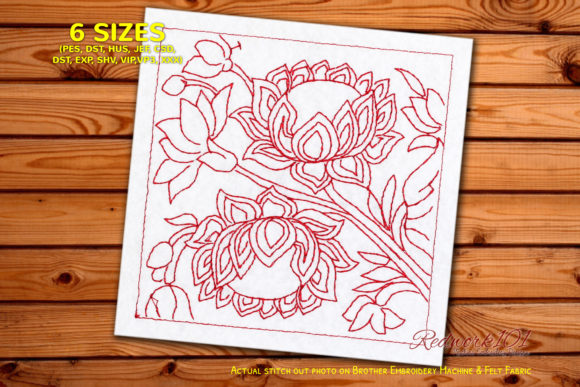
Lotus Design Lineart: A Thoughtful Embroidery Choice for Meaningful Gifts
First Impressions: Grace, Simplicity, and Quiet Romance
As an embroidery designer who’s tested hundreds of digital embroidery files for personalized gift shops, I was immediately drawn to the quiet elegance of Lotus Design Lineart. It’s not loud or overly ornate—instead, it carries a soft, hand-drawn charm that feels both intentional and tender. The two lotuses rest gently on adorned branches, with clean line work that suggests movement and growth without crowding the composition. There’s no heavy fill stitching; this is pure redwork-inspired lineart—minimalist, balanced, and deeply symbolic. To me, it reads as romantic, timeless, and quietly spiritual—not tied to a season or trend, but rooted in meaning. That makes it ideal for customers seeking something heartfelt rather than decorative.
Where Lotus Design Lineart Truly Shines
This machine embroidery design excels where emotional resonance matters most. For baby embroidery, it adds serene symbolism to organic cotton blankets, muslin swaddles, or linen nursery pillows—evoking purity and new beginnings without cliché. As a wedding gift, Lotus Design Lineart elevates simple items like linen napkins, monogrammed aprons, or heirloom pillow covers with subtle sophistication. It’s equally at home on embroidered towels (especially lightweight cotton or bamboo blends), custom tote bags for bridal showers, or delicate pillow covers for a couple’s first shared home.
For Etsy sellers and small shop owners, this design supports storytelling in listings: “Hand-embroidered with symbolic lotus motifs,” “Designed for meaningful milestones,” or “A quiet nod to resilience and love.” Its simplicity also means faster stitch times and lower thread consumption—key for scaling handmade product lines without sacrificing quality. And because it belongs to the Single Flowers category, it pairs beautifully with other botanical linearts for curated collections—think lotus + olive branch for unity, or lotus + fern for growth.
Thoughtful Placement Matters
Like all lineart-based embroidery files, Lotus Design Lineart rewards intentionality. Avoid placing it on highly textured fabric (like thick terry cloth or bouclé) unless you’ve tested stabilizer layers thoroughly—fine line details can blur or disappear. Similarly, steer clear of stretchy baby onesies or curved surfaces (e.g., mugs or curved tote straps) unless using advanced hooping techniques. On dark fabric, confirm your thread colors provide enough contrast—light ecru or pale gold thread may vanish on navy or charcoal without a white underlay.
Also note: while the design is elegant, it’s not built for micro-detail work. Don’t shrink it below 3 inches wide for finished products—small lettering or tiny stamens aren’t part of this file, and forcing scale compromises clarity. And if you’re planning frequent-wash items like kitchen towels or baby bibs, verify stitch density isn’t too sparse—lineart can fray over time without proper stabilization and secure thread anchoring.
How It Elevates Your Handmade Product Experience
Lotus Design Lineart doesn’t just decorate—it deepens connection. Customers browsing for a personalized gift often seek meaning, not just aesthetics. The lotus symbolizes renewal, strength through adversity, and quiet beauty—resonating powerfully with new parents, newlyweds, or anyone marking a personal milestone. That symbolism translates directly into perceived value: a $28 embroidered towel with this design feels more intentional—and more gift-worthy—than one with generic florals.
From a trust-building standpoint, clean lineart signals craftsmanship. When photographed well (soft lighting, natural fabric backdrops), it reads as refined and handmade—not mass-produced. That authenticity boosts buyer engagement, especially among discerning Etsy shoppers who scroll past cluttered, overdesigned listings. And because it’s versatile across categories—nursery decor, wedding keepsakes, even gender-neutral baby embroidery—it helps small business owners streamline inventory while maintaining emotional range.
Practical Embroidery Notes Before You Stitch
Before adding Lotus Design Lineart to your next batch of custom embroidery orders, here’s what I always do:
- Test on scrap fabric—especially if pairing with a new textile like bamboo velour or heavyweight linen.
- Check thread color contrast on both light and dark fabric mockups; consider using a printable mockup to preview placement and scale.
- Confirm hoop size compatibility—this is a single-branch layout, but double-check the file’s outer dimensions before loading into your embroidery machine.
- Review stitch density—lineart should flow smoothly, not look jagged or overly dense. If edges appear stiff, adjust your machine’s tension or digitizing settings.
- Use appropriate stabilizer: medium-weight cutaway for stable fabrics like cotton twill; tear-away for lighter linens; and optional topping for napped or fuzzy surfaces.
- Inspect small details post-stitch: ensure branch ends and petal outlines are crisp—not frayed or skipped.
- Verify commercial licensing before selling finished products. Since Lotus Design Lineart is by Redwork101, review their terms—some designers require attribution or restrict certain uses like resale on print-on-demand platforms.
A Final Thought for Small Business Makers
In a market saturated with fast trends and disposable designs, Lotus Design Lineart stands out by honoring slowness, symbolism, and sincerity. It’s not flashy—but it’s memorable. Whether you're an embroidery maker building a signature style, a gift shop curating meaningful stock, or an Etsy seller refining your brand voice, this digital embroidery file invites intention. It reminds us that the best personalized gifts don’t shout—they whisper, they linger, and they grow more meaningful with time—just like the lotus itself.