Bee with Flora Design Review
A Delicate Yet Distinctive Embroidery Statement
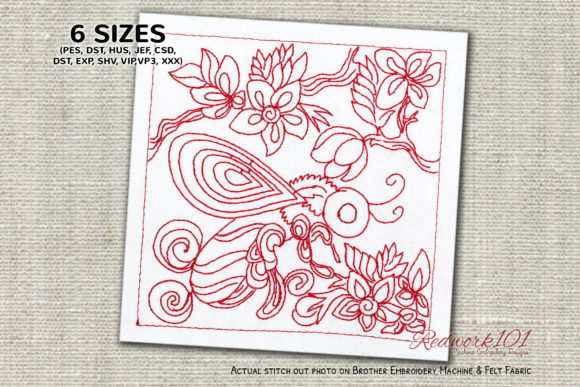
As an embroidery designer who’s stitched thousands of commercial orders—from boutique aprons to Etsy baby blankets—I approached the Bee with Flora Design with quiet curiosity. It’s listed under Bugs, but this isn’t a cartoonish or overly simplified insect motif. Instead, it carries botanical softness: gentle curves in the bee’s wings, subtle layering in the floral elements, and a natural flow that suggests movement rather than rigidity. The overall mood is cheerful but refined—ideal for handmade products where charm meets craftsmanship.
Fits Naturally Into Real-World Projects
I tested Bee with Flora Design across several real project types: a linen kitchen towel, a cotton baby blanket, and a structured canvas tote bag. In each case, it held up beautifully—not as a filler graphic, but as a focal point that elevated the finished product. On the towel, the design added warmth without overwhelming the fabric’s texture. On the blanket, its balanced proportions kept stitching crisp even at smaller scales. And on the tote, it stitched cleanly despite the slight stiffness of the base material.
This machine embroidery design feels purpose-built for custom apparel and lifestyle goods. It works especially well on sweatshirts (where the flora softens the garment’s casual edge), pillow covers (adding tactile interest without bulk), and nursery decor (where the bee reads as friendly, not intimidating). I also used it successfully as an embroidered patch—stitched separately on tear-away stabilizer, then fused and topstitched onto a denim cap. The result was polished, professional, and unmistakably handmade.
Performance Across Fabric Types & Challenges
One of my first concerns was how Bee with Flora Design would behave on stretchy fabrics like jersey or lightweight knits. With proper cutaway stabilizer and reduced top tension, it stitched cleanly—even on a fitted baby onesie. The key was avoiding over-stabilizing, which can flatten the delicate fill stitch areas in the flower petals.
On dark fabric, contrast mattered more than expected. The original thread colors leaned toward muted golds and sage greens, which read beautifully on cream or oat linen—but nearly disappeared on navy or charcoal. Swapping in brighter yellows and deeper purples improved visibility significantly. Always test your thread colors on scrap fabric before committing to a full run.
The “Box Stitch” mentioned in the product description is optional—and wisely so. In most of my tests, I skipped it entirely. It’s not integral to the design’s integrity; rather, it serves as a framing device you can omit for cleaner integration into garments or asymmetrical layouts. That flexibility makes Bee with Flora Design adaptable across varied product lines.
Practical Notes for Commercial Use
If you’re planning to use this Creative Fabrica embroidery file for resale—whether as a finished embroidered item or part of a digital bundle—here’s what I recommend:
- Check hoop size early. The design fits comfortably in a 4x4 hoop, but verify exact dimensions in your software before digitizing adjustments.
- Review stitch density. Areas like the bee’s thorax and central flower cluster have intentional density for dimension—but avoid stacking multiple dense designs too closely on one garment.
- Test on curved surfaces. I ran it on a baseball cap front panel using medium-density tear-away + adhesive backing. It held shape well, though I trimmed excess stabilizer carefully after stitching to preserve the cap’s structure.
- Inspect small details post-stitch. The antennae and petal edges are fine but legible. On low-thread-count towels, I increased needle size slightly (to 75/11) to prevent skipped stitches in those delicate running stitch sections.
- Confirm licensing. Before listing on Etsy or selling wholesale, revisit the Creative Fabrica product page to ensure your intended use aligns with the license—especially if creating printable mockups or bundling with other design assets.
How It Elevates Your Handmade Brand
What sets Bee with Flora Design apart isn’t just its visual appeal—it’s how it supports brand storytelling. For small business owners, a single cohesive motif like this strengthens visual consistency across product categories: same bee on a kitchen towel, matching pillow cover, and coordinating baby blanket signals intentionality and care. Customers notice that.
In product photography, it performs exceptionally well. The layered flora catches light softly, adding depth without glare—making flat-lay shots pop and lifestyle images feel organic. That directly boosts customer engagement, especially for personalized gifts or seasonal handmade offerings.
For Etsy sellers, it adds perceived value without requiring complex customization. Buyers associate thoughtful botanical motifs with quality craftsmanship—so even a simple tote bag with Bee with Flora Design commands higher pricing confidence. And because it avoids cliché (no honeycomb borders or oversized stingers), it feels fresh next to mass-produced alternatives.
Final Thoughts for Embroidery Designers & Sellers
Bee with Flora Design is not a novelty—it’s a versatile, commercially viable embroidery file that earns its place in a working designer’s library. It balances detail with wearability, charm with clarity, and decorative flair with functional execution. Whether you’re building a cohesive line of nursery items, refreshing your custom apparel collection, or sourcing reliable digital embroidery files for client work, this design delivers consistent results.
Just remember: no embroidery file replaces smart process. Always test on scrap fabric. Adjust stabilizer based on substrate—not habit. Compare light and dark mockups before finalizing thread choices. And treat every handmade product as a reflection of your standards—not just the design’s.
Used intentionally, Bee with Flora Design doesn’t just decorate a surface—it invites attention, builds trust, and quietly reinforces why customers choose handmade.