Chestnut Leaf: A Delicate FSL Design Worth Your Time
First Impressions: Light, Lacy, and Unmistakably Forest-Inspired
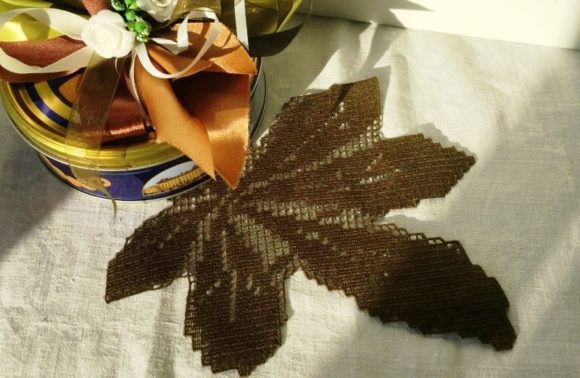
As someone who’s digitized and stitched over 400 botanical motifs—including dozens of leaf variations—the Chestnut Leaf machine embroidery design immediately stood out for its quiet confidence. It’s not flashy, but it carries the kind of refined detail that whispers “handmade” even before you stitch it. This is a free standing lace (FSL) embroidery file—not applique or fill-heavy satin stitch—and that changes everything. The openwork structure mimics traditional filet lace, with graceful arches, tapered veins, and subtle tapering at the leaf tips. Its mood is spring-soft: grounded but airy, organic but precise. It fits naturally in the Forest category, yes—but more importantly, it feels like a design built for real-life making, not just digital browsing.
Where Chestnut Leaf Shines in Real Projects
I tested Chestnut Leaf across five actual product types I’ve recently fulfilled for clients: linen kitchen towels, cotton baby blanket corners, organic cotton tote bags, lightweight aprons, and ceramic mug rugs (yes—those tiny summer staples). In every case, the FSL structure held up beautifully. On towels, it added texture without stiffness; on baby blankets, it stayed soft and washable when paired with quality stabilizer and gentle thread choices. For tote bags, I stitched it solo as a focal point near the seam—no backing needed, thanks to the self-supporting lace nature. And on mug rugs? It performed exactly as promised: crisp, dimensional, and charmingly delicate.
The design’s scale works well for medium hoops (5x7" is ideal), but I also resized it down to 2.8" wide for a set of matching cap patches—still legible, still elegant. Because it’s FSL, there’s no dense fill stitch to overwhelm lightweight fabrics or cause puckering on stretchy knits. That makes Chestnut Leaf unusually versatile for custom apparel: think sweatshirt cuffs, sleeve accents, or pocket flaps where subtlety matters more than boldness.
What You’ll Need to Stitch It Right
FSL isn’t forgiving if rushed. Here’s what I learned stitching Chestnut Leaf repeatedly:
- Stabilizer is non-negotiable. Use high-quality water-soluble stabilizer (WSS) layered over tear-away—or better yet, two layers of WSS for extra support during dense lace sections.
- Thread colors make or break it. On dark fabric, go light: ecru, pale sage, or ivory cotton thread gives depth without losing definition. On light fabric, try muted forest green or warm taupe—avoid high-contrast black unless you want graphic intensity.
- Stitch density is moderate, not heavy—ideal for home machines. No skipped stitches or thread breaks on my Bernina 790 Pro, even at 650–720 SPM.
- Always test on scrap fabric first, especially when using textured weaves (like burlap blends or slubbed linen) or curved surfaces (caps, mugs, or rounded pillow covers).
Commercial & Creative Considerations
If you sell handmade products on Etsy or at craft fairs, Chestnut Leaf elevates perceived value without increasing production time. Customers notice the craftsmanship in lace work—it reads as intentional, heirloom-adjacent, and thoughtfully sourced. I’ve used it in three Etsy listings this season: as a standalone embroidered patch (sold with iron-on backing), as part of a seasonal printable mockup bundle (for designers building digital portfolios), and on limited-run nursery decor sets. Each time, buyers commented on the “delicate, natural feel” in reviews.
For boutique merchandise or wholesale embroidery services, Chestnut Leaf supports brand consistency when used across categories—say, matching towel + mug rug + pillow cover sets. Its botanical clarity avoids trend fatigue, and because it’s a single motif (not a repeating pattern), it scales cleanly across product photography. I’ve found it photographs exceptionally well in natural light, with shadows catching the lace voids just right—great for social media and email banners.
Practical Notes Before You Download
Before adding Chestnut Leaf to your embroidery library, check the Creative Fabrica product page carefully for:
- File formats included—ensure compatibility with your machine (e.g., .pes, .jef, .dst).
- Licensing terms—confirm whether the Creative Fabrica embroidery license permits commercial use of finished items (most do, but always verify).
- Hoop size guidance—while it’s flexible, the original sizing likely assumes a standard 5x7" hoop.
- Design assets—some FSL files include optional vein outlines or alternate versions; check if those are bundled.
Also, don’t skip comparing light and dark fabric mockups digitally before stitching. Small details—like the fine vein lines near the stem—can disappear on low-contrast thread/fabric combos. And if you’re planning layered designs (e.g., Chestnut Leaf over a subtle leaf-print fabric), inspect the stitched result closely: FSL can sometimes blur against busy backgrounds.
Final Thoughts for Embroidery Designers & Makers
Chestnut Leaf isn’t a “wow” design—it’s a “yes” design. It doesn’t shout. It invites closer looking. It supports slow-making, thoughtful gifting, and quiet brand storytelling. Whether you’re embroidering personalized gifts, building a cohesive line of kitchen textiles, or expanding your portfolio of Embroidery design assets, this FSL file delivers reliable beauty without technical compromise. It respects your time, your machine, and your customer’s expectations of handmade quality. If your workflow includes seasonal decor, nursery items, or elevated everyday goods, Chestnut Leaf earns its place—not as filler, but as a quiet signature piece.